by Guadalupe Gutierrez
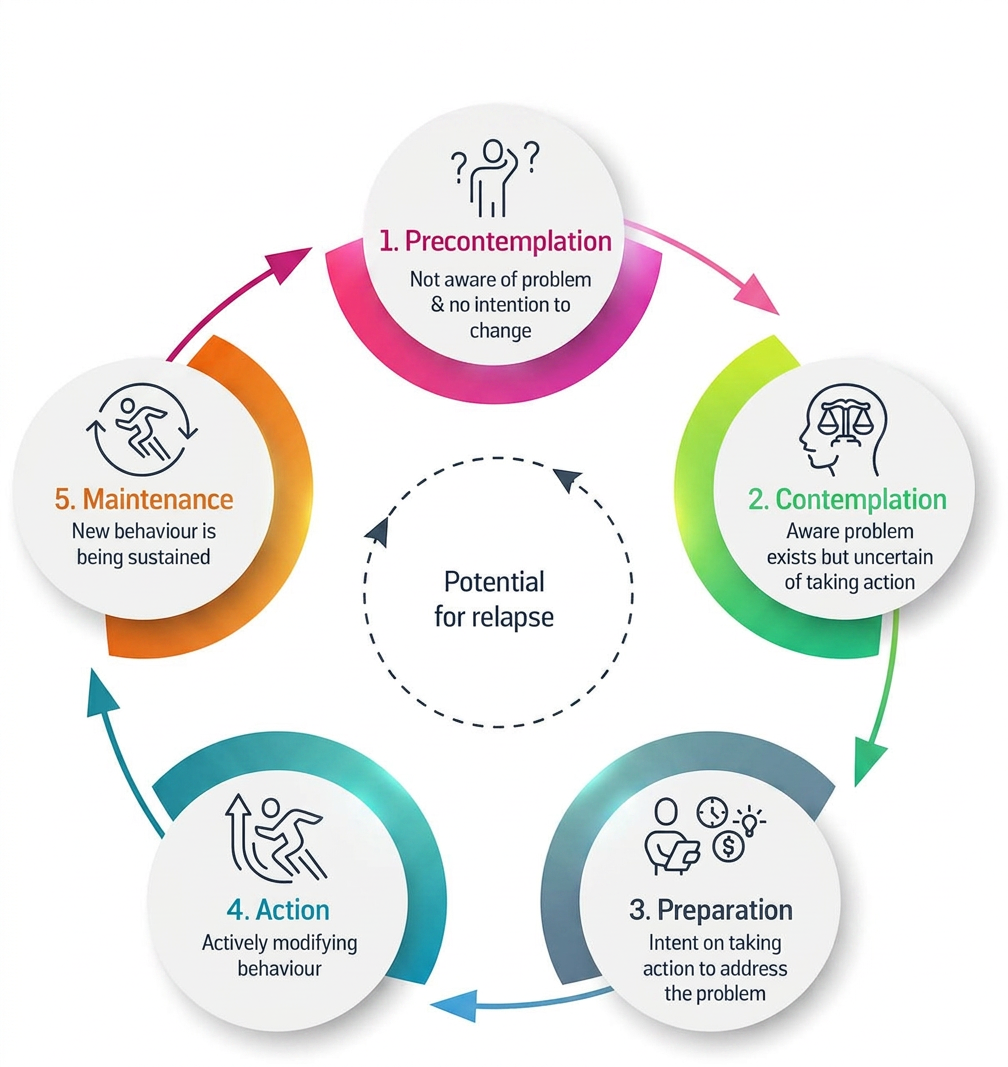
In recent years, there has been a major emphasis on calorie tracking as a weight management and health improvement strategy. While this technique is useful, it does not always explain why people eat in specific ways. From a public health standpoint, health is determined by habits, emotions, and broader social variables (World Health Organization, 2020; Michael Marmot, 2010). The Social Determinants of Health theory emphasises how factors like wealth, environment, and stress can influence daily activities, including eating habits.
Many people already understand what is considered “healthy” or “unhealthy,” yet this knowledge does not necessarily result in behaviour change. This is because eating is more than just a physical need; it is also associated with emotional and psychological processes. According to behavioural psychology research, habits are frequently automatic responses to stimuli such as stress or environment (Wendy Wood and Dennis Rünger, 2016; Habit Formation). Individuals, for example, may eat more during times of stress or exhaustion, and these behaviours can develop repetitive patterns that are difficult to change over time.
Habits are essential in general wellness because they are tiny, repetitive behaviours that can have long-term consequences for health outcomes. Instead of focusing solely on calorie consumption, it may be more beneficial to identify behavioural patterns and triggers. This is consistent with broader health theories, such as the Dahlgren and Whitehead Model, which highlights the importance of wider social and environmental variables in influencing individual lifestyle choices (Dahlgren and Whitehead, 1991; Marmot, 2010). This shows that better health is not only a matter of personal control but of context and behaviour awareness.
This strategy is consistent with fundamental public health objectives including prevention and early intervention. Individuals who increase their awareness of their behaviours may be able to detect triggers and make incremental changes over time. Evidence suggests that small, sustainable improvements are more beneficial than restrictive methods, which are typically difficult to maintain over time (NHS England, 2019; World Health Organization, 2020). This emphasises the need of realistic and supportive measures in encouraging health habit change.
Another key point is that health practices do not occur in isolation. Daily duties, emotional well-being, and social conditions are all factors that influence decision-making. Individuals who are stressed or have limited time, for example, may struggle to maintain regular eating habits. This reflects a broader knowledge in Public Health that health is influenced by complex and linked causes rather than simple individual choices (Marmot, 2010; NHS England, 2019).
Shifting the focus from control to awareness may promote a more balanced relationship with food. The emphasis shifts from categorising behaviours as “good” or “bad” to studying patterns and triggers. This is consistent with person-centred approaches in health promotion, which seek to empower individuals via information and self-awareness rather than limitation (WHO, 2020).
Tools that incorporate conduct and awareness, rather than just assessment, may provide a more practical approach to supporting change. For example, tracking both food consumption and mental state can aid in identifying patterns that would otherwise go undiscovered. This introspective method promotes understanding without judgement, which may lead to stronger long-term behaviour modification.
This perspective has also motivated the creation of kalio, a simple digital tool that allows people to track not just what they eat but also how they feel. kalio’s goal in relating food and emotions is to promote habit awareness in an approachable and non-judgmental manner.
Explore the app here: https://kaliowell.life
Overall, increasing health requires not only changing what people eat, but also understanding the patterns that drive those choices. By concentrating on awareness, patterns, and everyday actions, it may be feasible to support better outcomes in a more practical and achievable way in everyday life.
References
Dahlgren, G. and Whitehead, M. (1991) Policies and strategies to promote social equity in health. Stockholm: Institute for Futures Studies.
NHS England (2019) The NHS Long Term Plan. Available at: https://www.longtermplan.nhs.uk (Accessed: 23 April 2026).
World Health Organization (2020) Healthy diet. Available at: https://www.who.int/news-room/fact-sheets/detail/healthy-diet (Accessed: 23 April 2026).
Michael Marmot (2010) Fair Society, Healthy Lives (The Marmot Review). London: The Marmot Review.
Wendy Wood and Dennis Rünger (2016) ‘Psychology of habit’, Annual Review of Psychology, 67, pp. 289–314.

 Habit & Health Lab
Leave a comment